Urban Dog Walking Made Easy: Organize, Gear Up, and Socialize
Author:Arooba
Released:January 18, 2026
Walking three dogs at once can test anyone’s patience, each pulling a different way, crowded sidewalks, cars honking, and squirrels darting across your path.
If you’ve ever searched “dog walking near me” hoping for an easier option, you’re not alone. Group walks make a big difference: your dogs get social time, you share the effort, and together you discover routes you might never notice on your own.
Finding Dog Walking Near Me: Local Resources and Options
For urban dog owners looking for group walks or professional guidance, here are more options beyond pet stores, vet clinics, and local Facebook groups:
Professional Platforms & Apps
One of the easiest ways to find dog walkers in your area is through dedicated apps that match you with local walkers and sitters:
Rover® – Dog Walking Services & Sitters
A large network of dog walkers and pet sitters, you can filter by availability, walk length (e.g., 30 or 60 minutes), and experience. Rover profiles include reviews, background-checked sitters, and options for recurring walks. You can even schedule a Meet & Greet so you and your dog are comfortable before the first walk.
Another well-known platform where you can request on-demand or scheduled walks. The app generally lists walkers in major U.S. cities and lets you book directly through your phone.
These services are convenient if you want hands-on help, especially on busy workdays or when your own schedule doesn’t match your dog’s exercise needs.
Meetup Groups & Local Walking Communities
If you’re after a more social, group-oriented experience, Meetup (and similar event sites) are worth exploring:
Dog Walks on Meetup – U.S. & Global Groups
This topic page shows hundreds of dog walking and dog meetup groups across cities, from New York City strolls to dog-friendly hikes. You can RSVP to scheduled walks, join recurring groups, or even start your own.
“Walking Your Dog” and “Active Dogs” groups: Related Meetup categories often list larger communities focused on dog walks combined with other outdoor activities. These are especially good if you want to walk with a pack or meet other local owners.
Local Meetup groups vary widely in size and focus, so you might find Sunday morning neighborhood walks, breed-specific meetups, or relaxed social dog walks that fit your pace.
Community & Social Networks
You don’t have to rely solely on big apps:
Nextdoor and city‐specific Facebook groups let neighbors post casual or recurring dog walking plans, ask for recommendations, or form informal walking schedules. They’re often less formal than Meetup but can be rich with hyper-local info, like route suggestions or real-time updates.
Reddit city or dog subreddits sometimes have threads where locals organize pack walks or share meetup ideas. While not always structured, these can be a great source of tips and introductions.
Pet Services & Events
Some businesses or organizations host walks or social dog events:
Dog trainers and obedience schools sometimes run social walks as part of training programs. These events can double as bonding and socialization time.
Doggy daycares often offer group walks for clients; even if you’re not a regular, ask if they host community walks or events.
Parks & Rec Departments often list dog-friendly events or group walks in their seasonal guides.
Tips for Choosing a Group
When you find a walk or group you want to try, keep these things in mind:
Match the walk to your dog’s size, energy level, and current comfort with other dogs.
Check vaccination and behavior requirements before joining.
If you can, start with smaller groups (2–4 dogs) and meet organizers or walkers before committing to larger events.
Smart Urban Trail Routes for Multi-Dog Leashing
Not all city paths work well for walking multiple dogs. Narrow sidewalks force single-file lines and make even calm dogs tense, while busy intersections with little crossing time turn a short walk into a challenge.
Greenway systems are often the best choice. Former rail lines, riverfront promenades, or dedicated bike-pedestrian paths offer wide, paved surfaces separated from traffic. Dogs can walk side-by-side, you can gauge pace without squeezing past pedestrians, and the walk feels more natural.
What Makes Urban Trail Routes Work
Here are the key features to look for:
Minimum 6-foot width for comfortable spacing, so two or three leashes don’t constantly bunch up.
Few street crossings or traffic stops, reducing sudden starts and stops that spook dogs.
Water access roughly every half-mile, via fountains, shallow creek edges, or dog stations.
Tree cover or shade is essential for hot weather and midday walks.
Good lighting for early or late walks, helping you spot footing and keep an eye on dogs.
Park loops are especially useful: a mile-long circle can be repeated for high-energy dogs, while older or smaller dogs can finish one comfortable round without overexertion.
Recon the Route Before You Bring the Pack
We recommend walking the path alone first to identify trouble spots. Construction zones, territorial dogs behind fences, or blind corners near playgrounds can create stress if you’re unprepared.
Other considerations
Surface quality: cracked pavement, loose gravel, or abrupt curbs make leash handling harder.
Benches and rest points: even short breaks help reset grips, offer water, or calm excited dogs.
Garbage and bag stations: trails with plenty of waste disposal spots make cleanup easier.
Always Have Backup Routes
City life throws curveballs. A storm might flood a riverside path, or a weekend festival could close one route. Keeping at least three tested options: a favorite main path, a secondary route with shade and water, and a quieter alternative for crowds, ensures walks stay consistent no matter the weather or local events.
Multi-Dogg Leashing: Gear and Techniques That Work
Coupler leashes connect two dogs to one handle. They work perfectly for dogs who walk at similar speeds. Bonded pairs often prefer this setup since they stay close naturally.
Hands-free waist leashes free up both arms. Experienced handlers can manage two dogs this way while keeping a third on a standard leash.
Traffic handles short 12-inch secondary leashes provide quick control during crossings or when passing other dogs. They clip onto regular collars alongside the main leash.
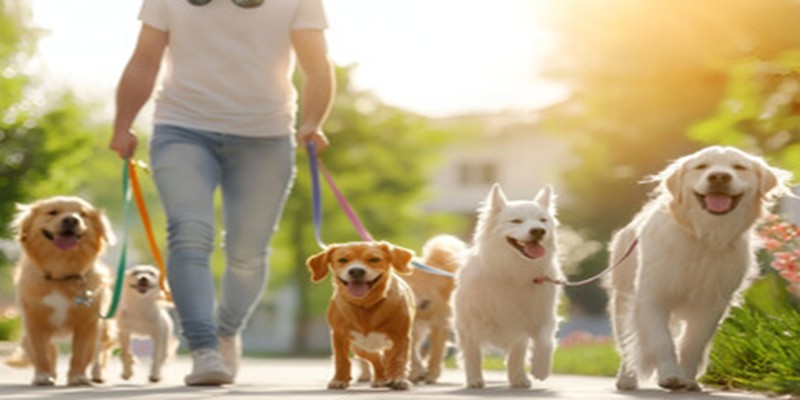
Different colored leashes help identify each dog instantly. During group dog walks with multiple handlers, this visual system prevents mix-ups.
Position matters for multi-dog leashing:
The calmest dog walks closest as the anchor
Reactive dogs stay on the outside for easier control
Competitive dogs need separation to avoid conflicts
Matched pairs can share couplers
The "pack stop" command gets all the dogs sitting simultaneously. Training this skill takes practice but pays off at busy intersections. Every dog stopping together prevents leash tangles and keeps the group organized.
Consistent leash length prevents trips. Retractable leashes create chaos with multiple dogs. Standard 4-6 foot leads work best for urban environments, provide enough freedom for comfort, and short enough for quick control.
Building Community Walking Groups
If you’ve scouted a few reliable trails and want to make city walks easier, consider starting a small community walking group. We’ve found that keeping it simple works best: begin with just three or four compatible dogs, meet at the same time each week, and let everyone settle into a rhythm.
A few basic ground rules go a long way: make sure all dogs are vaccinated, avoid aggressive behavior, and everyone cleans up after their pets. Beyond that, let the group breathe, rotating leaders keeps walks fresh, sharing supplies like water, waste bags, or a first-aid kit spreads responsibility, and a group chat makes last-minute changes simple.
Morning walks tend to attract professionals, while weekend afternoons bring families. Pick a time that works for your neighborhood, and you’ll often find others are just waiting for someone to organize.
In many cases, one post on a local Facebook group or Nextdoor thread is enough to get responses within hours. With a little structure and consistency, what starts as a simple walk can quickly become a thriving community activity.
Get Started with Group Dog Walks
Urban dog ownership doesn't need to feel overwhelming. Group dog walks turn isolated daily chores into social activities that benefit everyone involved.
Dogs gain socialization, exercise, and mental stimulation from exploring new urban trail routes together. Handlers discover hidden neighborhood gems, build friendships, and share pet care knowledge.
Community walking groups form more easily than most people expect. Starting requires just one other dog owner, one tested route, and commitment to showing up consistently.
For those still searching "dog walking near me" without results, be the organizer others are hoping to find. Post in neighborhood forums, talk to dog owners at the local park, and set a regular schedule. Groups built on consistency and clear communication thrive for years.
Tomorrow's walk could be the first step toward building something bigger. Reach out to one neighbor, pick one path, and commit to one regular time. That's how lasting community walking groups begin.
Related Posts
Does Your Dog Love You? Probably More Than You Think
Can Dogs Eat Eggs or Not? The Truth Most Owners Don’t Know

Homemade Cat Wand Toy Ideas That Keep Cats Engaged
Male vs. Female Cat Personality: How to Choose the Best Cat for Your Lifestyle
Stop the Mats! Brushing Schedules Every Long-Haired Dog Needs